
Growing up I was told “big things come in small packages.” I was a small child so the words were meant to reassure me. All of my cousins were taller, more muscular, and more well-liked than me. I was short, skinny, and a ball of energy. It used to make me self conscious to be smaller than so many others. I remember when I was in kindergarten. I thought my name was very unique. No one could have my name, in a small town, going to a small school. I thought this is where I can be myself. Little did I know I would meet another girl who was taller, had more muscles, and was definitely more well-liked in the class who would have my exact name with a different spelling. It was in high school that I had a Spanish teacher who would be the first to tell me that “big things come in small packages.” It was then I realized I am more powerful as I am then wishing to be what I am not.
The saying “big things come in small packages” is actually an ancient proverb that things should not be underestimated because of their small size. As Black History Month approaches I often think of my story. February is unique for many reasons. It is the only month that can gain a day depending on the year. With that, many people who are born on the 29th of February only get to celebrate their actual birthday a handful of times throughout their lifetime. It is also the month that many who are not taught it at home, get to learn about Black History.
The history taught when I was young was rooted in things that happened decades before I was born. I learned about Angela Davis, Langston Huges, Rev. Dr. Martin Luther King Jr., Malcolm X, the history of the Black Panthers, the cotton gin, the inventor of the stop light, and many important aspects of American culture that exist today because of Black people. As great as it was to learn about all of those people’s achievements, as a kid many of their stories did not resonate with me. I did not drive, peanut butter was a cheap snack that we ate all the time when money was tight, and as a descendant of enslaved people the last thing I wanted to think about was technology to pick cotton. Honestly, I enjoyed Denzel Washington’s portrayal of Malcolm X more than reading about him. Black History Month when I was younger, just did not apply to my life, though everything single person, invention, and idea had afforded me the ability to live a life that did not require me to fight for certain liberties but to be the recipient of them. I would learn the significance of it later in life at the Historically Black College I attended.
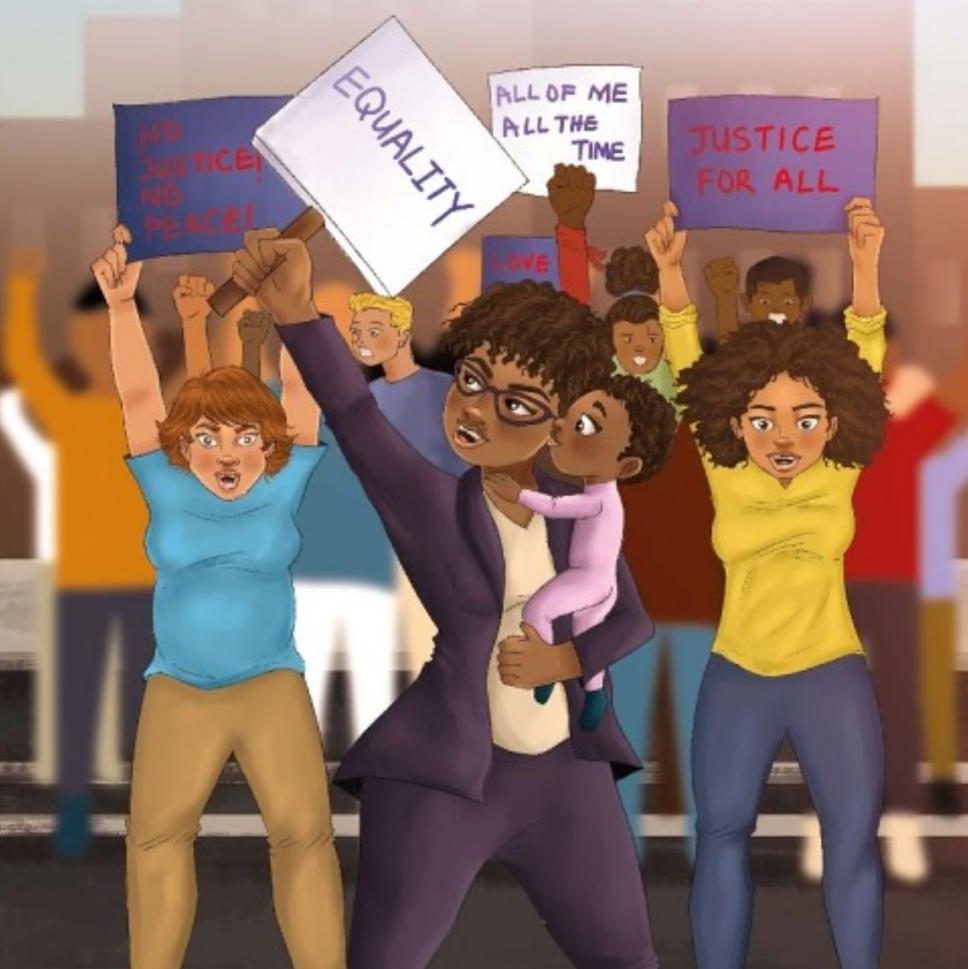
My first children’s book, “Ma, Where’s Mommy?” is about living Black history. It is a Black LGBTQIA family-centered book that focuses on the life of a young girl who spends her days with her civil rights, freedom fighting Mommy as an infant and toddler and later spends her pre-school years with her Ma. It is a book that as a child many of us in the LGBTQIA community wished we had to help us see ourselves in books and in the struggle for freedom for all of who we are in all parts of our lives.
Writing this book made me consider the question “What makes history?” A groundbreaking idea that benefits a community for the better? Advocacy that can be built upon and expanded to make society better? When I say that “Ma, Where’s Mommy?” is living Black History – I mean it in the context of our nation’s present battles for civil and human rights. Certain states, school boards, and leaders in government are banning books, banning cultural education and Black history curriculum by singling out the African Diaspora, intersectional identities, Black Queer History, and limiting what a person can learn in their classrooms. Our small, multiply-marginalized community must be pretty powerful for those with so much power to fear us enough to ban all conversation about us.
“Ma, Where’s Mommy?” is living Black history because in states where children of Black LGBTQIA families cannot “say gay, Black, transgender” or learn about other families like ours in school, those families can privately access a family that resembles their own through this book. Diverse family representation in children’s books ensures children from these families do not have to feel shame or experience disdain because they and their family have been legislatively erased from their education at school. Our children are reminded through the books they read at home that big things and powerful people do indeed come in small packages.
I encourage you to live history like the characters in this book. If we do not take it upon ourselves to read these kinds of stories to our children to remind them that they matter and their family matters – then we will lose a generation of movement babies, change makers, change seekers, change believers, and confident steadfast humans. Instead, we will create people who will accept that their family does not deserve to be read about or talked about in school. We will create people who will not fight for their place in life. We will create people who will accept whatever people say because they have never seen themselves or their family in books due to systematic erasure. It is my hope that your children see themselves as movement babies and that by buying this book and having it placed in libraries across the country we are demanding that our families not be erased.
As parents, we can push back against those who would prefer us not to exist. We can speak out boldly. We can be living history! We can model for our kids what it means to fight for our freedom so that they will know what is required to secure it for their kids.
Black History Month is filled with stories of people of all ages learning how to hone and leverage the power of the collective. February might be the shortest month – but the stories shared throughout each of the 28-29 days make it the mightiest of the year!

 "Choose Love, Choose Representation, Choose Family"
Leave a comment